Dartmouth to Host IvyQ Conference

Dartmouth to Host IvyQ in Fall 2014

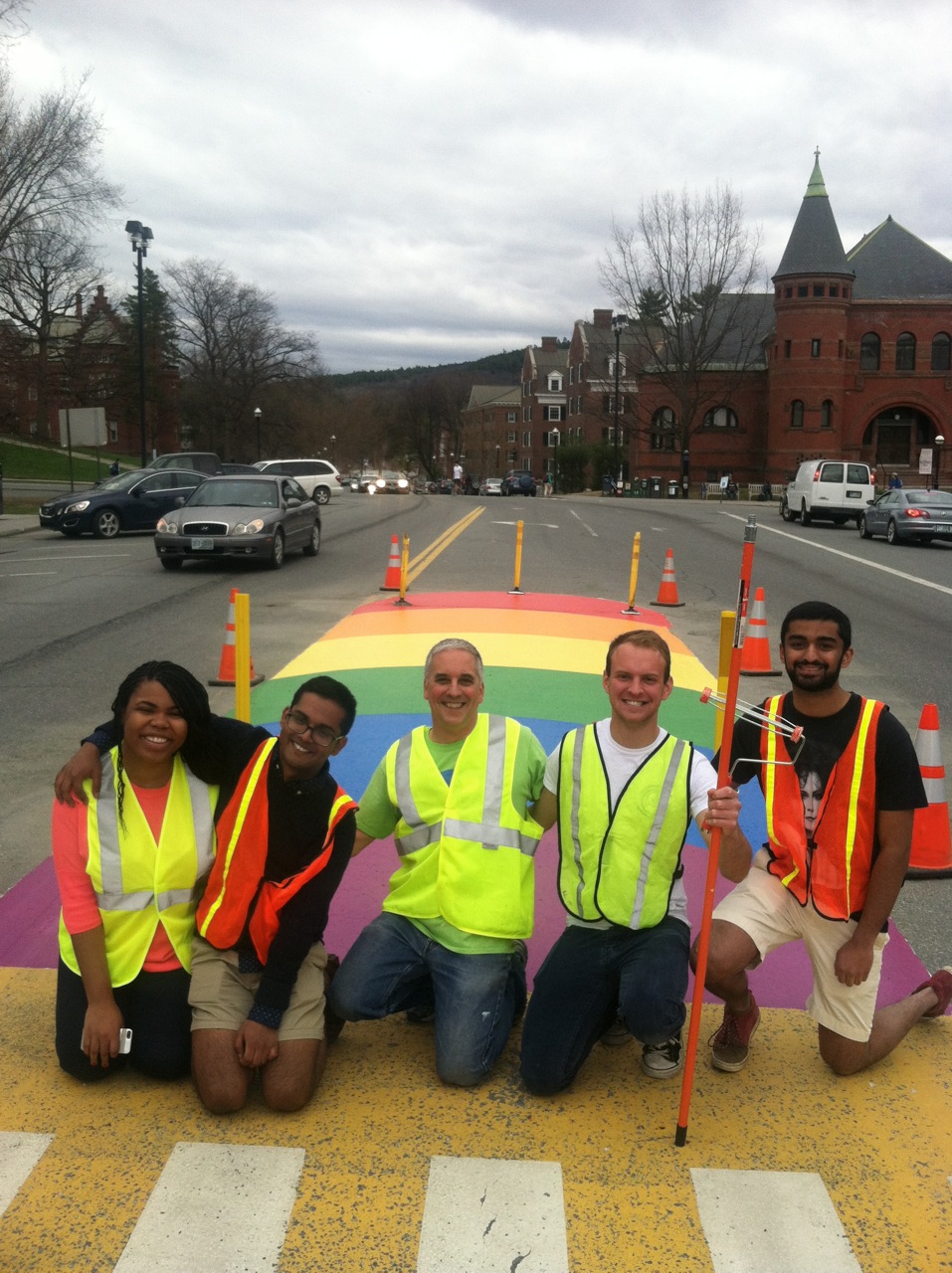
Dartmouth will host IvyQ on Nov 6-9, 2014, the weekend after the DGALA All-Class Reunion (Oct 31-Nov 2). The student planning committee is seeking alum participation:

  • Alums interested in hosting a workshop or participate in a panel on topics such as Poetry, Asexuality, Queer Histories, ARt (non-poets), STEM panel, Wellness, Ability, Class, Relationships, Sex, Sexuality, Identity, Advocacy, Faith, and Diasporas and Internationalism.
  • Alums with connections to companies or organizations that would be interested in sponsoring the IvyQ conference. The fundraising committee is actively seeking individual, corporate, and organizational sponsors.
  • For more info, email: ivyqprogramming@gmail.com

IvyQ is an annual undergraduate conference focused on issues of gender, sexuality, identity, and leadership and is open to students throughout the Ivy League. Through meaningful and diverse programming and community-building, IvyQ aims to create an intercollegiate community of LGBTQ students and allies equipped with the skills to examine self-identities, value those of others, and understand the importance of intersectionality. While empowering all students to feel confident in their identities and their potential to instill positive change in their own lives and the communities they inhabit, IvyQ stresses the acknowledgment of our institutional privilege and seeks lasting social change for LGBTQ communities.

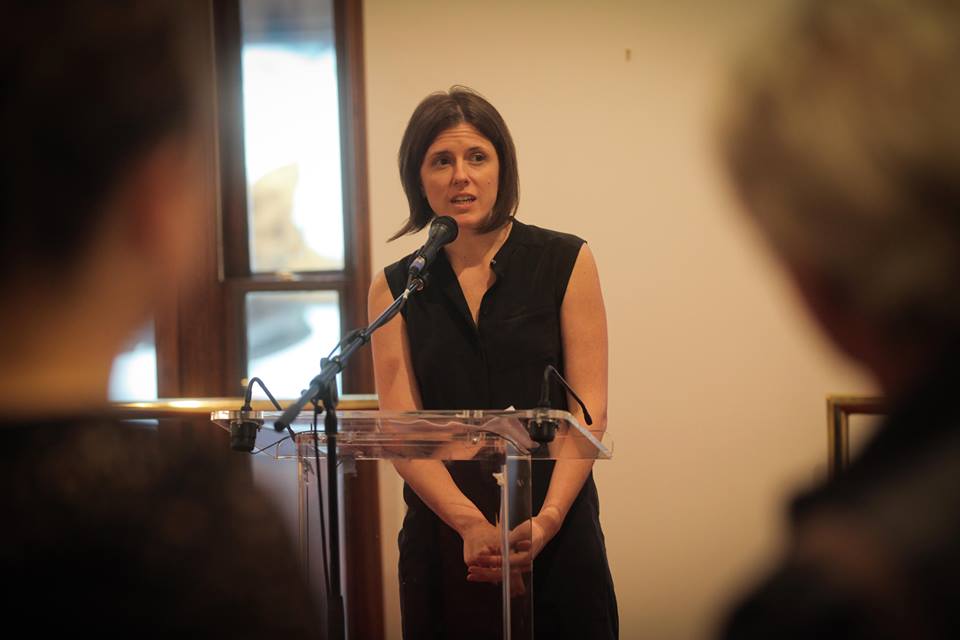
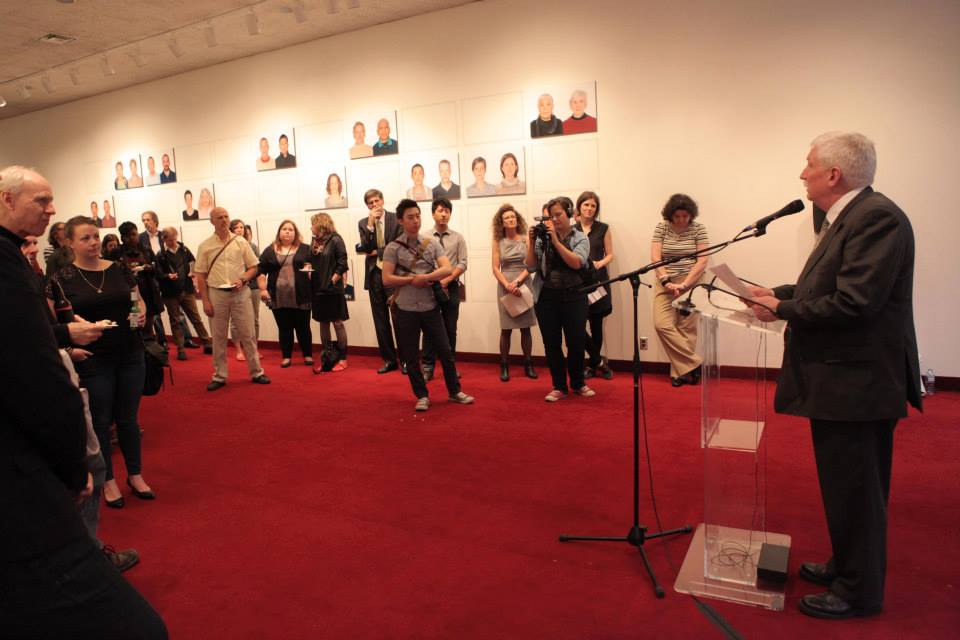
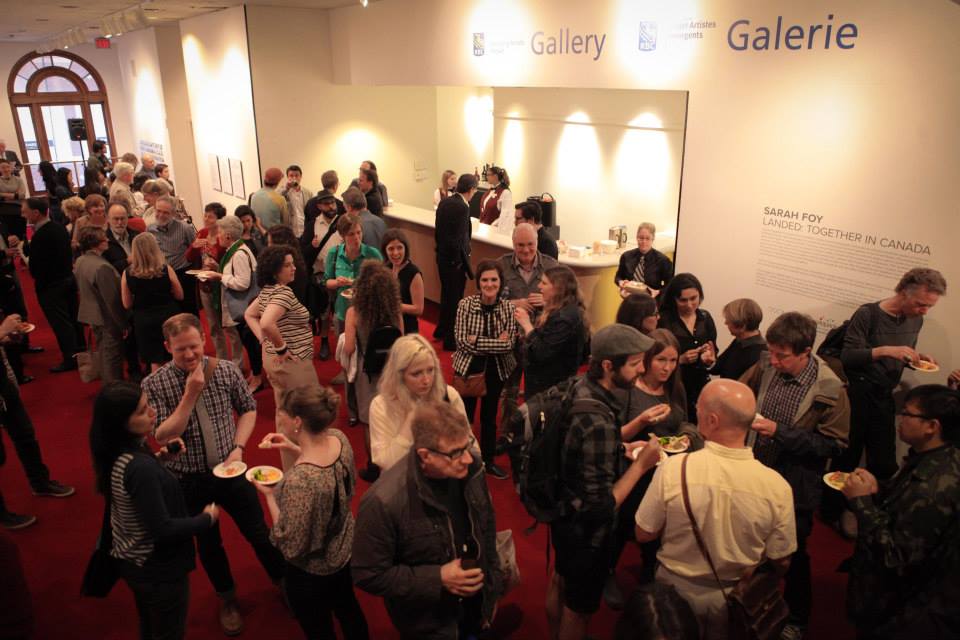
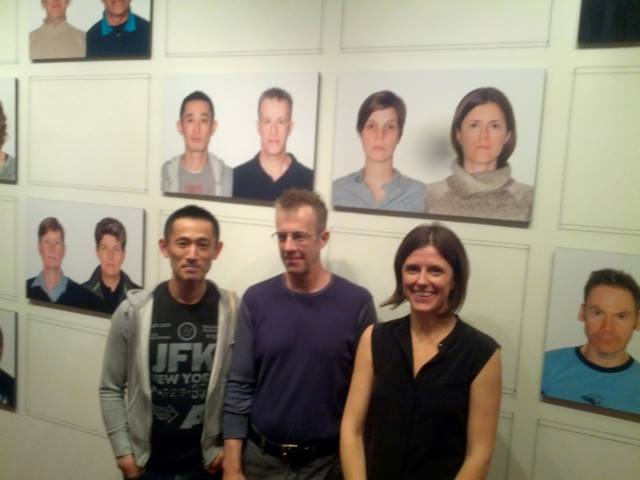
Landed: Together in Canada by Sarah Foy ’01

Landed: Together in Canada by Sarah Foy ’01

The Landed exhibition opens on May 28 with the launch of DOC NOW, the Ryerson University documentary media festival. Landed is also an official affiliate event of WorldPride 2014 Toronto, and will be in the Emerging Artists Project gallery at the Elgin and Winter Garden Theatre Centre, May 24 to June 29. For gallery hours and more information, visit: www.landedtogether.ca.

What was the inspiration for Landed: Together in Canada?

“I am an American, and in 2009, I fell in love with a non-American. At the time, U.S. federal law did not recognize same-sex marriage, and it did not permit U.S. citizens to sponsor their same-sex partners for permanent residence in the U.S. For my partner and me, this meant that our only viable option was to leave the U.S. when her student visa expired in 2012. We left our home, our community of friends and family, and our jobs and professional networks for the hope of finding a permanent home together.

“Fortunately in our case, my partner is Canadian. Because the Canadian government recognizes same-sex relationships, it was fairly straightforward for me to begin the process of immigrating to Canada as her partner. For many binational couples, the situation is far more complex because neither partner is from a country that recognizes same-sex relationships. Within a couple of weeks of my arrival in Canada, I met another couple who landed here for this reason. This inspired me to find as many couples as I could who immigrated to Canada because they could not live together in the U.S. I ended up identifying over 50 couples (including one who contacted me after reading about my project on the WorldPride website), 17 of whom I interviewed and photographed for Landed.”

Future plans:

“I am in the process of thinking through how I might continue to work on my thesis project. I would love to arrange for an exhibition of Landed in a gallery in the U.S. I may also seek funding to expand the project, e.g., to same-sex binational couples without a connection to the U.S. (or Canada), or to LGBT individuals who have sought refuge in Canada because it is too dangerous or difficult for them to live in their own countries.”

LGBT Canadian Project

Sarah Foy '01 LGBT Canadian Project

Landed Together in Canada - LGBT Canada

Landed Together in Canada: LGBT

Landed Together in Canada Sarah Foy '01


An Interview with Nancy Vogele ’85

Nancy Vogele ’85 Profile & Interview

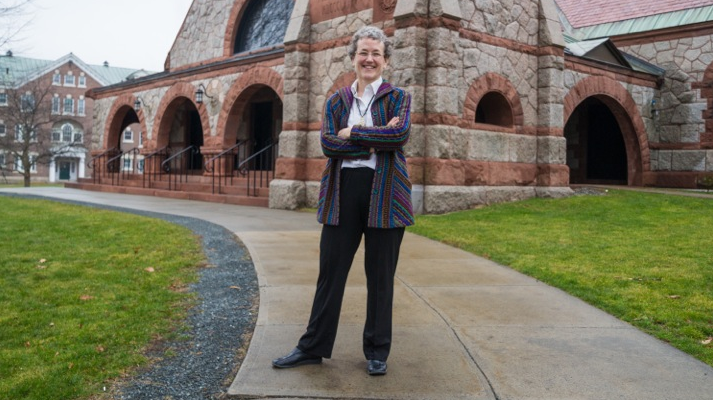
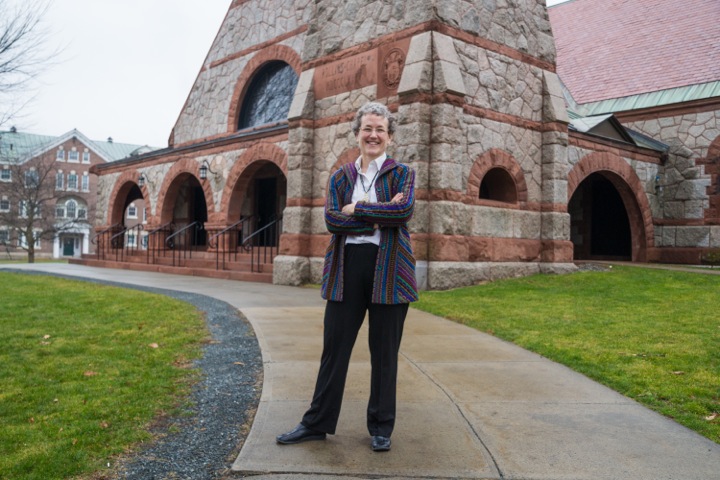
In December 2012 the Reverend Nancy Vogele ’85, an Episcopal Priest, was named by the Tucker Foundation to become Director of Religious and Spiritual Life at Dartmouth. Prior to joining the Foundation, Nancy served almost twenty years in Episcopal parish ministry, most recently as Rector of St. Paul’s Episcopal Church in White River Junction for over a decade. Nancy was a Director and Vice President of DGALA from 2000 to 2003, and served as co-chair of DGALA’s first all-class reunion in the fall of 2002. She was appointed in 2008 to serve on the Vermont Commission on Family Recognition and Protection to study same-sex marriage in Vermont. The Commission’s findings were instrumental in Vermont’s landmark legislation granting marriage equality to all.


Would you tell us a bit about the Tucker Foundation and your role in it?

The Tucker Foundation began in the mid 1950s as the moral and spiritual authority of the College. Today it is Dartmouth’s Center for Service, Spirituality, and Social Justice. We literally have thousands of students engaged each year with our many programs. I am currently the Director of Religious and Spiritual Life. In addition to overall Foundation work, I focus providing programming and one-on-one work that helps students (and others) who are interested to grow deeper in their faith as well as multi-faith programming that help foster an appreciation and knowledge of the role faith plays in peoples’ lives (on campus, across the country, and throughout the world). One part of my role is that I oversee about two dozen student religious groups and their 30+ advisors.

What’s it like to be back at Dartmouth and working with students?

I love working with students! Even when I was a local parish priest, Pam Misener would contact me whenever she thought a student could benefit from talking with me. Now, I spend a good portion of my time working directly with students. I feel this helps me keep perspective on the administrative part of my position! The Dartmouth students I work with are so smart, energetic, creative, and deeply

Are there any parts of your current role that you find particularly enjoyable or moving?

Working with students. During Winter Term, I also shepherded another group into being: “Journey Inward, Journey Outward.” This group, started by two international students, is designed to help fellow students explore what is at their core that brings vitality to their lives and then how to live from the place of vitality. I’m their “elder” (!) and I don’t mind the term because the student who gave me the title is from Uganda where elders are respected.

What opportunities do you have to collaborate with colleagues across campus?

During Winter Term, I co-facilitated an Intergroup Dialogue on sexuality with 10 students. Our IGD met for 2 hours each week – which is a big time commitment for students and the facilitators. But it was so worth it. Together we learned about gender and sexuality and shared our life stories. Students got to be real and themselves and really appreciated being able to have a safe and brave space to explore these issues. This program was developed through the Office of Pluralism and Leadership (OPAL). I interact with these wonderful people on a weekly basis. Since it is just my nature to be about campus collaborating with other departments and folks, I think I spend ½ my time doing this. I am part of the Orientation Committee for next fall’s incoming call of 2018; I am a member of the search committee for a staff position in OPAL; I talk with a lot of people across campus about mindfulness and meditation; and am always looking for possible new partners and friends. It’s great to have so many here at Dartmouth.

What changes have you observed in the climate for LGBT individuals at Dartmouth, from when you were a student, through when you were a DGALA leader, through today?

First of all, when I was a student – way back when (1981-1985), there was VERY little in terms of LGBT support. There was no OPAL; no IDE (Institute of Diversity and Equity). There probably was some sort of Gay-Lesbian student group, but I didn’t know about it. All I know if that I went to a frat with a gay friend of mine and while I was using the restroom, he got kicked out of the party. There was no one to register a complaint with. Today, there is a way to anonymously register such a complaint (a “bias incident report”) on-line (another thing we didn’t have when I was a student – believe it or not!!). There is an advisor for LGBTQ students, a Center for Gender and Student Engagement, a Gender Neutral Living and Learning community, and a soon to be opened Triangle House. And there are official policies against discriminating along sexual orientation or gender lines. None of this was present when I was a student. There was also no DGALA acting on behalf of the students and the College. DGALA is a very important and powerful alumni group and we use our power judiciously and well. We must never take this for granted but also shirk from the responsibility was have to be a voice of inclusion for all.

What are your hopes for LGBT students at Dartmouth today?

Like all students, I hope their Dartmouth experience will help them think in totally new ways about this world we live in and how it operates as well as about themselves: Who are they? Who do they want to be? What gives them a sense of vitality and purpose? What brings them deep joy?

What are you looking forward to regarding DGALA’s 30th? 

I can’t wait to see other LGBTQ alumni and all the smiles and laughter that happens when we all come together. I only went to one of my class reunions and ended up hanging out with all the queer alums from the various class reunions. I realized, at least for me, the DGALA reunions were the most positive way for me to reconnect with other alums and enjoy each other’s company. It will also be great for everyone to see the finished Triangle Office and getting to interact with alums and students involved in this effort.

DGALA Spring Newsletter Available!

The Spring 2014 GREEN LIGHT is now available online! View our latest newsletter here: Spring 2014.
The GREEN LIGHT is the official newsletter of The Dartmouth Gay, Lesbian, Bisexual and Transgender Alumni/ae Association

Special focus in the latest GREEN LIGHT on upcoming DGALA events:
MINI REUNION: JUNE 13-14, 2014
ALL-CLASS REUNION October 31-November 2, 2014

Edited by Pete Williams ’76
e-mail: DartGALA@gmail.com


Pride Weekend @ Dartmouth College - LGBT PRide

Triangle House Webcast Video Now Online

View the Triangle House Webcast & Discussion

Learn more about Dartmouth’s new living and learning residence for LGBTQA students.

Presenters:
Dr. Reese Kelly, Assistant Dean and LGBTQ Advisor
T Kienemund ’15
Caroline Kerr ’05, DGALA President
Sylvia Racca, Executive Director of the Dartmouth College Fund 

Triangle House Webinar, Dartmouth LGBT

Triangle House Webcast with Dartmouth College

Dartmouth College and Dartmouth Gay, Lesbian, Bisexual & Transgender Alumni/ae Association invite you to a live webcast featuring a conversation with:

– Assistant Dean and LGBT Advisor Dr. Reese Kelly
– DGALA Board President Caroline Kerr ’05
– T Kienemund ’15

About Triangle House: Dartmouth’s new living and learning residence for LGBT students, opening October 2014

WEBCAST
April 2, 2014
4–5 PM EDT 

To register, please go to http://www.visualwebcaster.com/TriangleHouseWebcast
Participants will have the opportunity to submit questions live during the webcast.

DGALA Awarded 2013 Group of the Year

2013 Group of the Year:  Dartmouth Gay, Lesbian, Bisexual & Transgender Alumni/ae Association

“DGALA exemplifies thoughtful partnership.  Partnership amongst alumni members.  Partnership between students and alumni.  Partnership between alumni and the College.  Such partnership was very evident in 2013.

DGALA continues to demonstrate strong support of LGBTQA students at Dartmouth, on both an individual and financial level.  Through a partnership with the Dartmouth College Fund, DGALA members’ contributions made 2013 its third record-breaking year and resulted in the naming of seven DGALA student scholars. The group also maintains the Bourne Fund, which provides students with assistance if they enter financial crisis after coming out.  DGALA continues strong communication efforts with its members and the College, with regular newsletters, a wonderful website, a vibrant Facebook group and regular communication with staff.

The group’s leadership navigates issues adeptly and with a sense of balance, taking care to support the College as well as its members’ varying perspectives.  DGALA’s leadership sets high standards, is conscientious, insightful, and remains informed on College happenings.  Members exhibit a commitment to strengthening the College, as evident through their participation on various committees this year, which included:  the search committee for the new Assistant Dean and LGBTQA Advisor in the Office of Pluralism and Leadership (OPAL), the Triangle House planning committee, as well as, the Alumni Council’s Ad-Hoc Committee on Diversity & Inclusion.

As part of the 2013 June Reunions, DGALA organized a slate of engaging and thoughtful programs which included the annual breakfast with President Hanlon, a private tour at the Hood museum, a faculty lecture, a jam-packed cocktail hour, and a Q&A with Senator Kristen Gillibrand `88.  All of these events resulted in record attendance numbers.  The group continues to foster meaningful connections between its members and the College, coordinating programs in Hanover and beyond and has big plans for their upcoming 30th anniversary all-class reunion in October, which promises to be engaging and exciting.  We look forward to seeing it all come to fruition!

For all these reasons and more, we are proud to acknowledge DGALA as the 2013 Group of the Year.”

Full article: https://alumni.dartmouth.edu/awards/clubandgroupawards/DGALA

Regarding the Leadership of the Tucker Foundation

Office of the President: Philip J. Hanlon ’77

August 14, 2013

Dartmouth’s support of gay rights and members of the LGBTQ community is complete and unwavering, as is our commitment to a campus that is diverse, welcoming, and inclusive. In light of concerns—specifically surrounding gay rights—expressed by members of our community about the appointment of Malawi Bishop Dr. James Tengatenga as the dean of the Tucker Foundation, I felt it was important for me to meet with him personally.

It was in this context that I sat down recently with Dr. Tengatenga and asked tough questions about his earlier statements on homosexuality. We also discussed his leadership within an Anglican Church in Africa that has often been hostile regarding gay rights.

Dr. Tengatenga spoke to me about his inspiring life of service to some of the world’s most vulnerable people, especially victims of HIV-AIDS. In passionate terms, he described his commitment to gay rights and how he has worked to support the LGBTQ community in Malawi in the ways that are most effective, given the country’s cultural context.

However, following much reflection and consultation with senior leaders at Dartmouth, it has become clear to me that Dr. Tengatenga’s past comments about homosexuality and the uncertainty and controversy they created have compromised his ability to serve effectively as dean of Tucker.

The foundation and Dartmouth’s commitment to inclusion are too important to be mired in discord over this appointment. Consequently, we have decided not to move forward with the appointment of Dr. Tengatenga as dean of the Tucker Foundation.

The debate over Dr. Tengatenga’s appointment also revealed a lack of clarity about Tucker’s mission and organization. This ambiguity is not new and, in fact, an external review committee recommended a significant restructuring of the Tucker Foundation in a 2009 report. Clarifying Tucker’s mission is imperative before we can install a new dean of this important Dartmouth organization.

I have asked Interim Provost Martin Wybourne to develop plans for interim leadership at Tucker and to convene a task force charged with making recommendations as to the foundation’s mission and organizational structure.

I look forward to working with others at Dartmouth to strengthen the Tucker Foundation and its contribution to the education of our students.

Philip J. Hanlon
President, Dartmouth College

Original Publication:
http://www.dartmouth.edu/~president/announcements/2013-0814.html

DGALA Responds to Tengatenga Appointment

Dear DGALA Community, 
 
The DGALA leadership has been closely monitoring and actively participating in the recent conversations about the appointment of Bishop Tengatenga as the Dean of the Tucker Foundation. We are very excited that many of you have been in touch in person, by email, and on Facebook to share your opinions, questions, and concerns. We share these concerns.  Please know that we have had a number of very frank conversations with the Dartmouth leadership this summer including, most recently, a conversation with President Hanlon, in which your concerns have been expressed in no uncertain terms. We are confident that DGALA’s voice has been heard loud and clear in Hanover on the topic of this appointment. We expect the President and Provost to make additional announcements about Bishop Tengatenga’s appointment this week.
 
The controversy over this appointment highlight’s DGALA’s role as a powerful conduit for the flow of information and opinion between our membership and the College on the issues that affect the well-being of Dartmouth’s LGBTQIA community. The fifteen alumni/ae who comprise our Board of Directors welcome every opportunity to learn what is on your minds. We can then raise your questions, concerns, and thoughts with the College leadership and other alumni leaders through the Alumni Council, Club and Affiliated Group Officers leadership groups, and through individual meetings with both College and alumni leadership.
 
We encourage you to continue to share your perspectives with us! You can reach DGALA via email at DartGALA@gmail.com or write to our leadership team at the addresses below.

 
Sincerely,
 
The DGALA Board of Directors
 
DGALA President, Vice President, and Alumni Council representatives:
S. Caroline Kerr ’05
Brendan Connell ’87
Board of Directors
 
Mail:
Dartmouth Gay, Lesbian, Bisexual &
Transgender Alumni/ae Association
208 West 13th Street
New York, NY 10011-7702
Note: email is the fastest way for us to receive your message.

An Interview with Earl Plante ’94

Earl Plante ’94 Interview

April 22, 2013

In December of last year, longtime DGALA member Earl Plante ’94 was named CEO of San Francisco Pride, a non-profit corporation that produces the annual San Francisco Pride Celebration and Parade, which will be marking its 43rd anniversary over the weekend of June 29th and 30th this year. Prior to joining SF Pride, Earl worked in New York City as Development Director of the Latino Commission on AIDS. Earl also has served as Executive Director of One Voice PAC, a progressive political organization; as CEO of the National Black Justice Coalition, a national LGBT nonprofit organization; and as Development Director at the National Minority AIDS. Earl has also held previous senior management positions at Union Settlement Association, Gay Men of African Descent, Funders Concerned About AIDS, and the Empire State Pride Agenda. Earl recently spoke with Green Light about his work and life.(A condensed version of this interview appears in the June 2013 issue of Green Light.)

Would you tell us something about how you got involved in a career relating to LGBT social justice? What are its rewards and challenges? What advice would you give to young alums considering the field?

It’s about passion, being affiliated and believing in LGBT social justice. I wouldn’t spend my time and effort otherwise. We have a limited time on this earth and I want to make sure I’m giving my all. It’s a fundamental reward and challenge…you have to feel it at a very visceral level. So I would advise others to follow your bliss, and do whatever you can…in ways big and small to help move the larger movement forward in positive directions.

How has your Dartmouth background influenced you?

My time at Dartmouth was very instrumental in my life development. I was able to explore my mixed identity, in addition to dealing with my coming out in a very conservative environment.

How is your new job?

It is the most challenging and complex job I have had to date…on all levels it presents many opportunities for personal and professional growth.

What are some interesting and/or exciting things about San Francisco Pride?

This is an amazing time to be doing this work at the largest and most well-known pride celebration in the country. Never in my wildest dreams did I think that we would be on the precipice of obtaining marriage equality, but in June the Supreme Court will rule on Prop. 8 and DOMA (defense of marriage act) and who knows where these decisions will lead the global LGBT movement, more broadly.

How would you compare living and/or working in San Francisco with New York City?

A. San Francisco is a very tolerant and vibrant environment where everyone has an opinion and they are not shy about letting you know their viewpoints! In NYC, you can be more largely anonymous in your travels; in SF and in my role as CEO of SF Pride, I always “have to be on” as I never know what room I am traversing and what they might think of me or the organization.

What are your thoughts about Dartmouth today?

My perception from afar is that it is a far, more accepting environment. It’s now about living your own truth and that’s something we can all admire and aspire to in our daily lives. And looking back, I am also very proud of my tenure at head of DaGLO/Dartmouth Rainbow Alliance and I hope it made a difference on campus and beyond. It’s definitely a heady time to be living and doing this work. We are seeing transformational change happen right before our eyes, especially with the progress of our LGBT youth, however, that does not mean there is not more progress to be made, but our enemies must see that the writing is on the wall…a generational shift is occurring in literal and figurative terms….change is coming in the political, economic and social domains in not just America, but the world writ large….and its energizing and inspiring to play a small part in this positive overall development.

An Interview with Dana Bevan ’69

Dana Bevan ’69 Interview
May 2, 2013

Dana Bevan ’69 has just released “The Transsexual Scientist: Have you ever wondered what the experience of transsexualism or transgenderism is like or what causes these phenomena?” As the title indicates, Dana is a transgender scientist, and her work brings both a scientific and personal perspective to the origins and experience of transsexualism and transgenderism. Her book, which will be noted in an upcoming Dartmouth Alumni Magazine, is available online at Amazon. Dana recently spoke with Green Light about her book and her life. (A condensed version of this interview appears in the June 2013 issue of Green Light.)

You describe yourself as transsexual? How does that term differ from transgender?

Transgender is an umbrella word that refers to a person whose gender behavior is incongruent with the sex they were assigned at birth. The rules of most cultures require people to follow arbitrary gender behavior categories that are associated with their culturally assigned natal sex. Transgender people find that their assigned behavior category is not congruent with their innate disposition. Sex and gender are not the same thing, despite the current trend of conflating them. Conflating sex and gender perpetuates stereotyping. Sex refers to organs and gender refers to behavior.

Most transgenders (about 80-90%) move back and forth between gender behavior categories through crossdressing, but transsexuals want to remain permanently in the gender behavior category that fits their innate disposition. Transsexuals seek to permanently modify their bodies, their declared gender, their voices and their behavior. Transsexuals do this with hormones, facial electrolysis, plastic surgery, and voice lessons.

For the purposes of research I treat transgenderism and transsexuality (TSTG) as one phenomenon. Many transgendered people become transsexuals. Most important, there is no scientific evidence to distinguish between the two, other than the frequency of TG presentation.

How did being a transgender person affect your life at Dartmouth during the 1960s?

It affected my life in three ways. First, I attempted to “get over” my transsexuality by engaging in highly masculine activities including football and ROTC. This is very common for male-to-female transsexuals but it does not work in the long term. I did enjoy a course by Louie Morton in the History Department on military technology which helped me in my career. Second, I was extremely lonely because I could not tell anyone about my transsexuality. It made male friendships and dating awkward. Third, I managed to find out through coursework and library research that TSTG was a naturally occurring biological phenomena which has occurred in most all times and cultures. This made me believe that there was nothing “wrong” with me in spite of how most cultures view TSTG.

How did you come to be involved in scientific research relating to transsexualism and transgenderism?

While at Dartmouth, I was inspired to become a physiological psychologist in the hope that I could understand TSTG. But when I got to graduate school at Princeton, I found that there was no research support for TSTG issues and very previous research. This situation persists today in the US, wherein social science research is ridiculed as wasteful. The poster child for this in my day was Dr. Ellen Bersheid who was castigated by Senator Proxmire and given the “Golden Fleece” for wanting to study why people fall in love.

So for many years, I downplayed my physiological training and became a practicing human factors psychologist to help design machines for people in DOD and the intelligence community.

In 2005, I returned for a semester to teaching physiological psychology while at Georgia Tech and found that the rest of the world had not been as prudish as the US and that there was a wealth of unorganized foreign research bearing on the physiological causes of TSTG. Since 2005, I have been wading through this material and wrote the book to document what I found.


Can you give us a brief overview of the field?

The physiological psychology of TSTG touches on many disciplines including psychology, neuroscience, developmental psychology, pharmacology and, now, genetics and epigenetics.
Genetics refers to DNA inheritance while the new science of epigenetics refers to modifications of DNA itself or its expression. Epigenetics includes the effects of the prenatal environment on development.

The common wisdom of what causes TSTG is almost completely wrong. For instance it is not a “lifestyle choice” or a sexual fetish. There is good evidence that it is caused by genetic and epigenetic factors that make one “born this way”.

What are some common misconceptions regarding transsexualism and transgenderism?

The most common misconception is that TSTG is some sort of psychological or medical “disorder”. This year, for the first time, TSTG will no longer be listed as a disorder by the American Psychiatric Association.

The second most common misconception is that TSTG is rare. The best estimates I have found are that about 2-4% of males are TG and .1% TS. For females the estimates are about half those percentages. Most people think that they have never met a TSTG but they are wrong. Both TG and TS have become expert in hiding. TGs can easily change clothes and there are many TS living in their preferred gender category in what is termed “stealth”. There are some physical clues to TSTG and I reveal them to medical doctors in my TSTG continuing education course to help them ask the right questions of their patients. This may seem trivial but remember that TS and some TG take hormones and the possibility of drug interactions and side effects becomes more dangerous if a doctor does not know that a patient is TSTG. (For example, estrogen can cause blood clots).

The third most common misconception is that TSTG prostitutes are on the street because they want to be there. Truth is that most were thrown out of their homes by their parents. Some clergymen and cultural leaders encourage this parental rejection by pathologizing and demonizing TSTG. The result is one of the most dangerous public health problems in the US because such TSTG “street people” disproportionately harbor HIV and venereal diseases.

The fourth most common misconception is that there are no harmful effects on TSTG in hiding. There is a body of research on the psychology of secrecy and it indicates both physical and mental effects. TSTG must constantly remember their secret, so that they can carefully parse their words. These mental gymnastics interfere with work and relationships. They deprive TSTG of their “authenticity” or being true to themselves.

The fifth most common misconception is that TSTG go to the restroom to attack people. Let me assure you that we are more afraid than you are. We are just there to get our business done.

What do you think about Dartmouth today?

My current experience is limited to research contacts with scientists and medical professionals so I will confine my remarks to research activities.

IMHO basic and applied science at Dartmouth needs more funding and support in order to maintain excellence in undergraduate and graduate education. The Geisel school has been successful in maintaining excellence by raising support through grants, some of which are the “big science” type. The same approach obtains at Princeton and Georgia Tech where I have taught. They are not afraid to get grants from DOD and DHS and the infrastructure and quality of the research greatly improve the educational experience for undergraduate and graduate students. Such grants also help defray overhead costs.

What do you hope for Dartmouth and transgender people in the future?

I hope that Dartmouth can be a leader in increasing research and education of the TSTG phenomena in order to improve understanding and tolerance. DGALA seems to be doing a good job of spreading the word on diversity but courseware and research needs to be supported.

I hope that the trend continues for TSTG to be encouraged to identify themselves in childhood. This requires both cultural and parental tolerance. TSTG can now get early counseling to assure them that they are not abnormal and to help them explore an authentic life. A new option for those who believe they are TS is to block the onset of puberty until they can decide whether to transition at age 16. This is far better than waiting until after puberty or waiting until later life, with unwanted physiological and mental effects. Believe me, I know about those effects. I have had every hair on my face zapped by an electrologist and some hairs more than once.

I hope that religious, political leaders and hate mongers will stop demonizing TSTG. I hope that they will realize that the contribution of some 1-2% of the population is reduced by lack of authenticity and that TSTG sex workers represent a public health hazard that needs to be addressed through understanding and social work, rather than persecution.


The DGALA-DCF Scholars Challenge is On!

DGALA is excited to announce that a member of our community and her partner will match, dollar for dollar, gifts made by DGALA members to Dartmouth through the Dartmouth College Fund, if they are received by June 30. Our generous Challengers have committed to matching up to $15,000 in gifts from DGALA members who have not made an annual gift this year.

For several years now, DGALA has had a special relationship with the Dartmouth College Fund; for every $30,000 our community contributes through the Fund, a GLBTQA student receiving need-based financial aid is named a DGALA Scholar. Our philanthropy last year resulted in four DGALA Scholars. Our goal this year is to support five scholars.

Contribute today!

From the Green Light: LGBT Community Speaks Out on Greek Houses

Following the recent widespread publicity concerning Dartmouth’s fraternities, leaders from the College LGBT community have added their voices and perspectives to the discussion…. To try to learn more about the situation, and capture the range of opinion that exists, Green Light spoke with a number of leaders and other members of Dartmouth’s alum, student and faculty LGBTQA communities.   Read the full article here.

Professor Jeff Sharlet to speak at Annual DGALA Mini-Reunion

Professor Jeff Sharlet, the recipient of The International Gay and Lesbian Human Rights Commission’s 2011 Outspoken Award and the National Lesbian and Gay Journalists Association’s 2011 Excellence in Journalism Award for Excellence in Feature Writing, will be the featured speaker at DGALA’s annual mini-reunion in Hanover. The mini-reunion will take place Friday, June 15 and Saturday, June 16 and will also include our annual breakfast with the President of the College, a private tour of the Hood Museum and a cocktail reception. Dorm housing is available but extremely limited this year — if you are interested, please email us ASAP.

Join the DGALA Board

DGALA is currently seeking nominations and applications for new members to join our Board of Directors! This is an exciting opportunity to stay connected to life at Dartmouth and to be deeply involved in all of DGALA’s activities, including:

–> Planning and vision-setting for the organization
–> Providing leadership for and participation in Board committees
–> Working with the administration at Dartmouth on policies that affect LGBTQ alumnae/i and students
–> Social and professional events around the country and in Hanover
–> Collaborating with other Dartmouth Affiliated Groups and other Ivy peer LGBTQA alumni/ae organizations
–> Mentorship for young alums and current students
–> Sponsorship of important on-campus events such as annual PRIDE programming, all-class and mini-reunions

If you are interested in joining, or have any questions about the Board of Directors position, please email David Hankins ’05. Nominations of possible candidates are also welcome!

To apply, please submit a resume and brief cover letter outlining your interest in serving on the DGALA Board to David Hankins ’05.