Torrey Peters GR ’13 on Detransition, Baby and More

Pete Williams ’76, November 2021
(excerpted in the November 2021 DGALA newsletter)

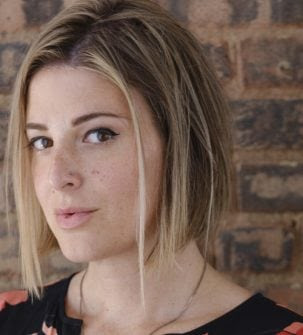
Her publisher Random House aptly described Torrey Peters GR ’13’s best-selling 2021 novel as “brilliantly and fearlessly navigating the most dangerous taboos around gender, sex, and relationships, gifting us a thrillingly original, witty, and deeply moving novel.” The novel (now available in paperback and currently being adapted into a television series) has won numerous accolades (Named One of the Best Books of the Year by Esquire: Long listed for The Women’s Prize; Roxanne’s Gay Audacious Book Club Pick; New York Times Editors’ Choice). However, tackling taboos and writing honestly about sex, gender and relationships can also bring forth detractors, as well as challenge thoughtful readers. On June 15 of this year, DGALA leader Sheila Hicks-Rotella ’04 led a candid conversion about these issues, ideas and more in a Zoom presentation co-hosted by Women of Dartmouth and attended by a large audience from around the world, who also asked questions. Following is a summary of what Torrey had to say. If you’d like to view the full Zoom recording, contact us at dartgala@gmail.com.

Torrey on Her Time at Dartmouth

I transitioned and came out then; it turned out to be a good experience; people were not hostile; they were interested. My thesis advisor ended up being one of the most important people whom I have ever met. We started with a traditional thesis advising relationship, but it evolved to include broad philosophical issues; it shaped my thinking.

Influences for Detransition, Baby

Transitioning in my early 30s, I had to find meaning in life. Older trans women generally were not able to have the broader horizons that younger trans women do today. As a guide I read works of divorced cis women who were starting life anew in their 30s. You need to start over with less time, fewer illusions. They used humor, sadness, joy and loss. I tried to apply that model to trans women.

Controversies

The phenomenon of detransitioning is sometimes used by bigots and transphobes; I do not believe that it is something that we cannot talk about. We all do things in life that we come to regret, but that does not mean that we were wrong in the first place. Most people who detransition do so because it can be very difficult; you can lose friends, family, jobs. I say, “Let’s talk about it.” That is more healthy. Even to joke about it. A comparable example has arisen when same-sex couples divorce; they may feel that they are stigmatizing same-sex marriage, but that is not true. Divorce should not just be for straight people.

Another controversy was my nomination for the Women’s Prize for Fiction [a prominent prize awarded annually in England to a female author of any nationality for a work in English]. Some critics called me a man in disguise infiltrating a women’s contest. These attacks did not bother me; they triggered good conversations in the UK and actually helped sales there. I take more seriously criticisms by trans people; some felt that my book exposes too many secrets.  I say that no transgender people should feel shame about any aspect of their lives, and the way to get rid of that shame is to shed sunshine, as my novel does, and as my public appearances, such as on “Good Morning America” and “Today” have done.

How Allies Can Help

There are short-term and long-term issues. Currently there are a lot of anti-trans bills in legislatures in many states. Yes, we should fight those. But you also need to understand that they are distractions so that energy gets siphoned off the fight. There are bigger issues than sports. Some trans women cannot get jobs and have other much more serious issues. And those issues extend to a lot of other people.

Advice for Writers

My early writing was for everyone and no one. Later, when I wrote for trans people, I found a sense of urgency. Don’t worry much about your craft as a writer, but ask to whom do you have something to say with urgency. Imagine those people and speak to them. If you do that, it will be interesting to others as well.

Use in the Book of “Transsexual”

Question from the audience: What were your motives in using “transsexual” rather than “transgender?” Answer [paraphrased]: This is the milieu in which I live. We sometimes make fun of the term “transgender.” Some of my trans friends have issues with the way that we have been grouped. It is not that “transgender” is a wrong term. But “transsexual” has the word “sex” in it, so it’s more fun and has a pulpy 70s feel. It’s just a preference.

How People Should Come Away from Detransition, Baby

It’s not that the book gives a solution. It describes the situation for trans women today and shows their problems. How are we going to make a life together and not lie to each other? This is the question that the book raises; the current generation of trans women must figure out how to live. In my own life I am grappling with some of the questions that the book raises.

The Zoom Session

Thank you for having me and asking such thoughtful questions. The logistics were great and the turnout was wonderful.

Becoming Johanna Viewing and Q&A (10/7/21)

We are thrilled to announce that documentary filmmaker, educator, and activist Jonathan Skurnik ’86 is providing DGALA members with special FREE access to watch his film Becoming Johanna, and will then join us for a Q&A on Zoom.

You will also be treated to a short about Robert Jackson ’86 coming out his senior spring (7 min). DGALA funds are being used to fund the digitization of this film!

Please register here.

A Vimeo link will be sent after registration to permit viewing in advance of the Oct. 7 Q&A event. There will not be a joint viewing session for these films.

NYC: Safe/Haven: Gay Life in 1950s Cherry Grove (10/1/21)

Join DGALA as we explore: “On view outdoors in New-York Historical’s rear courtyard, this exhibition explores the gay and lesbian community that flourished during the 1950s in Cherry Grove through some 70 enlarged photographs and additional ephemera from the unique holdings of the Cherry Grove Archives Collection.”

Read more about the exhibit here.

Tickets are free. This is a timed-entry event, and you must reserve your own tickets in advance here. (Please select the 6:30pm time slot.) For those interested, we can find an outdoor place to eat after the exhibition! Please RSVP here to let us know you’re coming, and that you have reserved your ticket!

Patricia Fitzgerald and Kay Guinness, Cherry Grove Beach
Patricia Fitzgerald and Kay Guinness, Cherry Grove Beach, September 1952 | Cherry Grove Archives Collection, Gift of Gay Nathan and Julie Paradise

DGALA Undergraduate COVID Thesis Presentation (7/13/21)

DGALA had the great honor to support the research of Olivia Goodwin ’21 this year. Olivia will now be presenting their interesting and important thesis research to the DGALA community on July 13th, 7-8pm EST. Join us by registering here.

Olivia shares more information about their thesis:

Olivia Goodwin '21
Olivia Goodwin ’21

My thesis is a mixed methods approach, which explores:

  1. how LGBTQ+ Dartmouth undergraduate students have changed their use of support networks during the COVID-19 pandemic,
  2. the differences between students by how their environment impacted their experiences with stress, and
  3. the differences of stressors between students of marginalized sexual orientations and marginalized gender identities.

I am specifically studying the experiences of LGBTQ+ students’ potential homotransphobic-specific stressors that quarantine imposed on some. I hope that this project becomes part of Dartmouth’s history as a record of students’ experiences during COVID-19.


DGALA Virtual Trivia Night (6/24/21)

You are invited to join DGALA for a virtual trivia night open to DGALA members, friends, family, allies, current students and incoming students!

WHEN: Thursday, June 24, 7:30pm-8:30pm (ET)
WHERE: Online, via Zoom
RSVP: Register for the DGALA Virtual Trivia Night (and check out the event on Facebook)

Featuring Dartmouth and diversity-themed trivia, plus social time after.

Q: Which US politician, who was openly gay, was fundamental in defeating Proposition 6, which would’ve made it illegal for members of the queer community to teach in schools?

Join us at 7:30pm for trivia and awesome tunes with your host, David Blum ’93, of Great Big Trivia. Each round begins easy and gets progressively more difficult, so whether you’re a casual trivia player or seasoned trivia buff there’s something for everyone!

We’re playing for fun (and PRIDE), but like traditional pub trivia we’ll keep score.

You’ll submit answers via a Google Form and the winner will receive some DGALA swag!

Can you beat the competition?

A: Harvey Milk

Event flyer for DGALA Trivia Night

Alumnae Authors: In Their Words: Torrey Peters GR’13 (6/15/21)

Please join DGALA and Women of Dartmouth for a virtual alum book club event, held in partnership with alumna-owned Still North Books & Bar in Hanover.

We will hear from Torrey Peters GR’13, whose new book Detransition, Baby is about what happens at the emotional, messy, vulnerable corners of womanhood that platitudes and good intentions can’t reach. Torrey will be joined in conversation by Sheila Hicks-Rotella ’04. Reading the book is encouraged, but not required to attend.

WHEN: Tuesday, June 15th at 7PM EST
WHERE: Online, via Zoom
RSVP: Register for Detransition, Baby: Torrey Peters GR’13 with Sheila Hicks-Rotella ’04

DGALA is hosting a raffle for Dartmouth members of the LGBTQIA+ community. Fill out this form to win a copy of the book from Still North Books & Bar.

In Detransition, Baby, Peters brilliantly and fearlessly navigates the most dangerous taboos around gender, sex, and relationships, gifting us a thrillingly original, witty, and deeply moving novel. Kirkus Reviews calls the debut, “Smart, funny, and bighearted. Trans women will be matching their experiences against Reese’s, but so will cis women—and so will anyone with an interest in the human condition.” And Garth Greenwell says, “It’s the smartest novel I’ve read in ages. Peters manages to be utterly savage and lacerating while also conveying endlessly expanding compassion. It’s kind of a miracle.” Peters is set to write the pilot episode of the TV adaptation for Detransition, Baby with Grey’s Anatomy writer-producers Joan Rater and Tony Phelan lined up to serve as showrunners on the half-hour dramedy adaptation of the novel.

Torrey Peters GR'13

Torrey Peters GR’13 is the author of the bestselling novel Detransition, Baby (Random House, 2021), which was longlisted for the Women’s Prize and was a Roxane Gay’s Audacious Book Club Pick. She is also the author of the novellas Infect Your Friends and Loved Ones and The Masker. Peters holds an MFA from the University of Iowa and a Masters in Comparative Literature from Dartmouth. She splits her time between Brooklyn and an off-grid cabin in Vermont.

Sheila Hicks-Rotella '04

Sheila Hicks-Rotella ’04 has worked in college and independent school admissions and financial aid for 15 years. At Dartmouth she played rugby and was a Women’s and Gender Studies major (more or less in that order). She graduated from the Harvard Graduate School of Education with a degree in School Leadership in 2009. She lives in The Bronx with her wife Emily, a technology entrepreneur, and their two young children. In her spare time she writes comedy and organizes play dates (which means something different than it did 20 years ago).

DGALA Career Panel for Students (5/13/21)

Zoom in as a panel of DGALA alums answers questions from the existing LGBTQ+ students of the campus group Within. Panelists have been selected based on Within’s survey of careers that are of the most interest. “We have lots of business presentations, so we’d like to hear more from DGALA alums in government, non-profits and the performing arts.” In addition to the panel discussion, attendees can ask questions and receive responses from alums participating. Chloe Fugle ’23 and Lee Merkle-Raymond ’86 will moderate.

WHEN: Thursday, May 13, 7-8:30pm (EDT)
WHERE: Online, via Zoom
RSVP: Register for the DGALA Career Panel

View the recording of this event.

Online Event with Two DCF Scholars (5/5/21)

DGALA and the Dartmouth College Fund are excited to be partnering for this live online opportunity for DGALA alums to meet two of our DGALA/DCF scholars.

Join us for this Zoom meeting on Wednesday, May 5 at 5pm (EDT) to hear from seniors Colin Goodbred and Jess Zhang as they share moments from their Dartmouth experience. To receive your personalized link, please register via the email distributed to DGALA members. Need help registering? Email dartgala@gmail.com.

Colin Goodbred '21

Colin Goodbred D’21
Colin Goodbred will share stories from his experience with the triathlon team, testifying against anti-trans legislation in NH, and how his classes have shaped the person he is today.

HOMETOWN: Brentwood, TN
MAJOR: Quantitative Social Science

Jess Zhang '21

Jess Zhang D’21
Jess Zhang will speak about her leadership role with Phi Tau (a gender-inclusive Greek house) and the project she created with the Class of 1961 arts initiative grant.

HOMETOWN: Philadelphia, PA
MAJOR: Linguistics

DGALA Supports Dartmouth’s New Race, Migration and Sexuality Consortium

Pete Williams ’76 with Amanda Rosenblum ’07, November 2020
(excerpted in part in the November 2020 DGALA newsletter)

On October 15th of this year, DGALA’s board of directors, together with the Dartmouth Asian Pacific American Alumni Association (DAPAAA) Executive Board and concerned DAPAAA Alumni, wrote to President Hanlon, urging the College to provide institutional backing and long-term funding for Dartmouth’s relatively new Consortium of Studies in Race, Migration, and Sexuality (RMS Consortium). Of our Ivy League peers, Dartmouth remains the sole institution without a centralized race/ethnicity/ migration studies program, and there remains a notable lack of funding in the areas of sexuality and gender studies. DGALA believes that increased investment in this effort is a necessary step toward addressing systemic inequalities, and preparing our students to identify, tackle, and dismantle inequities across the globe.

The Consortium is directed by Women’s, Gender, and Sexuality Studies Professor Eng-Beng Lim, who was instrumental in starting the program and already making it a significant presence on campus during what is now its second year of operation. The Consortium is co-directed by Professor Kimberly Juanita Brown, and has 19 founding faculty members across the college’s departments. Notably, Matthew Garcia, professor of history and Latin American, Latino, and Caribbean Studies and founding RMS faculty member is co-chairing the search committee for Dartmouth’s first Senior Vice President of Diversity and Equity.

DGALA and DAPAAA leaders led an awareness campaign with all alumni prior to Alumni Council that resulted in a significant number of emails about RMS being shared with alumni councilors and the Alumni Liaison committee. RMS was brought up repeatedly during Alumni Council. We hope to continue to elevate the conversation.

As a result of emails to President Hanlon and the Dean of the Faculty Professor Elizabeth Smith, the leaders have now scheduled an early November meeting with Professor Smith, whose office provided initial support for the Consortium and could be instrumental in assuring its continuation and growth.

Eng-Beng Lim
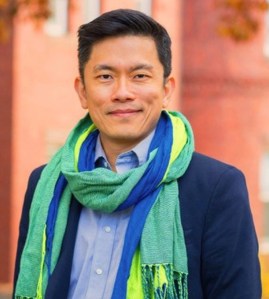
Women’s, Gender, and Sexuality Studies Professor Eng-Beng Lim

To learn more about the RMS Consortium, DGALA recently conducted a virtual interview with Professor Lim, who is Dartmouth’s first tenured professor specializing in LGBTQIA-related academics.

Would you tell us more about the Consortium?

Thank you so much for your inquiry. I have had several meetings with the leadership of DAPAAA and DGALA concerning RMS’s status and future.

RMS is driven primarily by faculty and student interest on questions of justice (economic, social, racial, gender, sexual, migrant). It has tremendous buy-in from our campus community, and has a national presence with over twenty top scholars on our advisory board.

In terms of the Consortium’s priorities, we are putting together the following:

  1. An interdisciplinary minor
  2. Strengthening our Undergraduate Scholars and Fellows program (we recruited 30 this Fall)
  3. Weekly Faculty workshops and salons, “Putting Radical Thought to Action.”
  4. Humanities Institute on Transnational and Decolonial Ethnic Studies
  5. Consortium lectures
  6. Weekly newsletter (that you can subscribe by writing to us).

Our curriculum is aligned with intersectional and decolonial approaches to questions race, migration and sexuality.

My sense is that new initiatives in academia can be a challenge to advance. What is the current status and future hopes for the Consortium?

In terms of the College’s support, Dean Smith provided generous seed funding to establish the Consortium on May 6, 2019. Our agreement was for the funding to last 12-18 months, and to then find sustainable funding after that. In the meantime, I have secured additional funding from the Leslie Center [at Dartmouth] to augment her initial infusion of funds. We hope to become a Center and/or to find reliable sources of funding. Institutional priorities and fundraising are areas that are outside of my control or honestly, understanding. However, lots of alums have expressed support for RMS.

Because the work we do as a Consortium is also a matter of faculty volunteerism, we can do this work regardless of the College’s fundraising efforts. Having structural permanency would obviously have greater impact across the board on campus, and facilitate this work better. I can say in the areas where faculty have control, that is around RMS curricular re-thinking and programming for example, there is immense excitement about the Consortium across the campus. We are currently well positioned to make transformative contributions to the College in intersectional and decolonial studies of race, migration, and sexuality and their critical surround. Also, in areas of under- or zero representation, such as Asian American Studies and queer studies, RMS will try to fill in the gap and provide small offerings in and through RMS.

How does the Consortium compare with what other peer institutions are doing?

No other peer institution has a center that incorporates queerness and sexuality as part of their thinking on race. And speaking of race, we are the only Ivy League campus without a center on race and ethnicity, let alone gender and sexuality! We are on fallow ground indeed.

If you would like to express your support for the RMS Consortium and for Dartmouth to provide institutional backing and long-term funding to RMS, please write to the Alumni Liaison Committee at alc@dartmouth.edu. Those emails are shared with the Board of Trustees.

Beth Robinson ’86 to Join DGALA in Zoom Chat (1/21/21)

Beth Robinson
Vermont Supreme Court Justice Beth Robinson ’86

Vermont Supreme Court Justice (Freedom to Marry superhero-lawyer-icon!) Beth Robinson ’86 Zoom-side chat! How many of us know the story of the legal case Baker v. State of Vermont? One of our own, Beth Robinson ’86, was one of the lead attorneys who filed a lawsuit in Vermont on behalf of three couples seeking the freedom to marry – AND WON! Supreme Court Justice Robinson (aka Beth) offered to join us for a Q&A about the documentary “The State of Marriage,” which was made about this case! We hope you will join us for this extraordinary event!!

“Mary Bonauto partnered with small-town Vermont lawyers Beth Robinson and Susan Murray in a 2-decade struggle that built the foundation for the entire marriage equality movement. Despite fierce opposition, Vermont became the first state to grant same sex couples legal recognition through a groundbreaking 1999 State Supreme Court decision, and the first to legalize marriage equality by legislative vote in 2009.” (Amazon)

Hollywood Reporter said, “The State of Marriage” is an indispensable addition to the history of the marriage equality movement and a suspenseful nail-biter right up to the feel good ending. From groundbreaking LGBT legal recognition for same sex couples in 2000, to becoming the first state to enact same sex marriage through a dramatic legislative vote in 2009, the film shows in a very personal way how, as HRC national field director Marty Rouse says, Beth, Susan and Mary really changed the course of American history.

HRC’s Marty Rouse said, “They really changed the course of American history.” Featuring Freedom to Marry founder Evan Wolfson, civil rights legend Rep. John Lewis, and Tony-winning playwright Terrence McNally.

You can watch the documentary in advance and join us at 8pm for the Q&A, or you can join us as we watch it together at 6:15pm on January 21st via Zoom before the Q&A. More details coming via email and our social media.

Generations Project Writing Workshop & Sharing Session

To mark our 35th anniversary, and in honor of SpeakOut, we are honored to be hosting an event in collaboration with The Generations Project – an organization that facilitates intergenerational queer writing workshops, and bringing LGBTQ+ experiences to life through storytelling (check them out on Instagram)!

At this event, our partners from The Generations Project will facilitate a virtual and intersectional learning program, bringing together LGBTQ+ Dartmouth alums for a creative sharing and discussion group. The Generations Project facilitators will guide us through multiple short prompts, with an emphasis on free self-expression and imagination.

The exercises are designed to be non-intimidating and easy for writers and beginners alike, and to spark various avenues of discussion. It’s sure to be the most interactive virtual event you attend all year!

  • Writing Workshop: Thursday, September 24; 5-7 p.m. ET (Join Facebook Event)
  • Sharing Session: Thursday, October 1; 5-6 p.m. ET

Both events will be followed by Happy Hours (Facebook Event), co-hosted by Chuck Edwards ’86 A&S and Leandra Barrett ’15 – both of whom participated in the SpeakOut project!

Becoming a State Supreme Court Justice: A Conversation with the Hon. Beth Robinson ’86 of Vermont and the Hon. Anne Patterson ’80 of New Jersey

Dartmouth Lawyers Association, Women of Dartmouth, and DGALA, the Dartmouth LGBTQIA+ Alum Association invite you to a special Zoom presentation:

Becoming a State Supreme Court Justice: A Conversation with the Hon. Beth Robinson ’86 of Vermont and the Hon. Anne Patterson ’80 of New Jersey
September 17, 2020, 6:00 – 7:30 PM EDT

Click Here to Register

Please join the Honorable Beth Robinson ’86 of the Vermont Supreme Court, and the Honorable Anne Patterson ’80 of the New Jersey Supreme Court, as they discuss their respective paths to becoming a judge on the highest court in the state-court system, and the important role of the states in protecting individual rights and liberties. In particular, Justice Robinson will discuss Vermont’s efforts to protect the rights of same-sex couples, and Justice Patterson will discuss New Jersey’s recent criminal justice reforms.

Justice Robinson received a J.D. from the University of Chicago Law School in 1989. She clerked for the Honorable David B. Sentelle of the United States Court of Appeals for the D.C. Circuit, entered private practice, and then served as counsel to Governor Peter Shumlin. Governor Shumlin appointed her to the Vermont Supreme Court as an Associate Justice on November 28, 2011.

Justice Patterson received her J.D. from Cornell Law School in 1983. She practiced in the firm of Riker, Danzig, Scherer, Hyland & Perretti and also served as a deputy attorney general and special assistant to New Jersey Attorney General Peter N. Perretti, Jr. Governor Chris Christie nominated her to serve as an Associate Justice of the New Jersey Supreme Court and was sworn in on September 1, 2011.

The moderator, Amanda Prentice ’06, is currently an Assistant Regional Counsel for the United States Environmental Protection Agency, Region 2, in the Air Branch.

This program is free.

A link to the Zoom meeting will be emailed shortly before the program to all registered attendees.

Upon request, a certificate of attendance for 1.5 hours will be provided tor those who wish to seek CLE credit from their respective state regulators.

Virtual Mini-Reunion Events

The ongoing pandemic has forced DGALA’s annual on-campus June mini-reunion to be moved online. Happily, two of the mini’s most popular events will still take place (albeit virtually). Registration is required for each event.

First, on Thursday, June 18th, we will be hosting President Phil Hanlon ’77 for a conversation starting at 5 p.m ET, followed by a social hour for DGALA members.

Register for the June 18 meeting with President Hanlon

On Saturday, June 20th, join us for a virtual exhibition discussion with the Hood Museum of Art! Morgan E. Freeman, Native American Art Fellow, and Jami Powell, Associate Curator of Native American Art, will guide DGALA through exhibitions that were installed in the galleries prior to closing and that will be on view when the museum eventually reopens. They will highlight a number of works in the collection by queer Indigenous artists and describe the museum’s ongoing work with Dartmouth faculty and students and the surrounding Upper Valley community.

Register for the June 20 Hood Museum virtual exhibition discussion

Featured exhibitions: Shifting the Lens and Form and Relation: Contemporary Native Ceramics

History and Influence of Sororities at Dartmouth

Interview of Maya Khanna ’22 by Amanda Rosenblum ’07, May 2020
(excerpted in part in the June 2020 DGALA newsletter)

Maya Khanna '22 on LSA in the Peruvian mountains
Maya Khanna ’22 on LSA in the Peruvian mountains

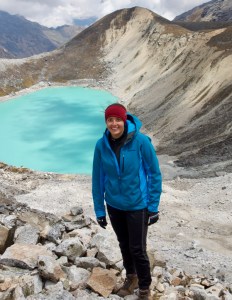
Maya Khanna, a Dartmouth ’22 from Rochester, Minnesota, is taking an off term to conduct a qualitative research project interviewing alumnae about their experiences with sororities, whether they were affiliated or unaffiliated. She is looking at the history of sororities at Dartmouth and their influence in shaping the Dartmouth community. I participated in a Zoom interview with Maya back in March. She was professional, gracious, and made me feel immediately comfortable. I decided to turn the tables around and interview her for this issue of the Green Light. Maya was up early, about to head to a local Farmer’s Market with her family, but happily chatted with me about her project and her thoughts on Greek Life at Dartmouth in general. You can read some of our conversation below.

What’s your life like at Dartmouth?

I’m a ’22, so I’m in my second year. I’m a history modified with women’s and gender studies major, and Spanish minor. I was on an LSA+ learning Spanish in Peru this past Fall. When I returned, I saw many of my friends had decided to rush houses. The Dartmouth Outing Club is one of my primary communities on campus, and I’m very involved in Cabin and Trail and the club Nordic ski team. I’m also part of SAPA (Sexual Assault Peer Alliance) and SPCSA (Student and Presidential Committee on Sexual Assault) and other projects related to gender-based violence prevention and response. I write for The Dartmouth.

How did your research project begin?

Academic research is not something I really thought about doing because I’d always associated academic research with the hard sciences. I took a class with Annelise Orleck my freshmen summer called “Women and American Radicalism on the Left and the Right.” Annelise Orleck is my thesis advisor and faculty mentor. She’s a wonderful human being and academic resource. What I found most striking about the course was the way we used individual stories to exemplify broader historical trends. That sparked my interest. I believe that storytelling is one of the best ways to examine history. In Orleck’s work, she couches individual experiences in the broader historical context in which they take place. This is a method of research I found really appealing. My first off term was coming up this Spring, and I thought it would be a good idea to enjoy Hanover and explore research I’m interested in. Annelise told me I’d need to come up with my own project, so I immediately started thinking about what to focus on. I’m interested in institutional accountability. Dartmouth’s history is fraught in so many ways. There’s a lot there in terms of looking at the institution’s history, and looking at individual narratives as well as the time and culture of when they were students more broadly. Dartmouth’s culture is really unique. We’ve all heard of the Dartmouth bubble. In many ways, it follows the ebb and flow of social trends more broadly in the United States. It’s impossible to go to Dartmouth and not feel how Greek life impacts students on campus. I thought others must have done research on this topic, but that’s not the case. There is very little academic research on Greek life, and even less in sororities more specifically.

What do you think about gender dynamics in sororities?

I do a lot of work with SAPA and SPCSA on campus on gender-based violence prevention and response. Underlying any work you do in gender-based violence is inherently a question of power. Who has power? Who has historically had power? This relates to how students relate to each other on campus, as Dartmouth is a historically patriarchal institution. Women have struggled to find a space outside of male structures of power. More broadly, I’m interested in how students relate to each other on campus. Gender is just one form of power difference, but you could also look at race and sexuality, etc. Of course, you have to consider intersectionality, as no one is just one identity. I’m just really interested in gender.

What do you hope comes out of your research?

These are stories that everyone knows but no one really talks about on campus. My interviews cover the more nuanced elements of sororities. The truth is, 70% of eligible students join. However, many don’t stop to think about the implications of joining sororities or why they want to join. I hope to encourage conversations that prod people to think more critically about their part in affiliated systems at Dartmouth. We are all complicit in the ways we interact with these systems. It’s important to open up a broader conversation about this. I would love to create a book project, a presentation, or a podcast to share with the wider campus in a more digestible way. I’m still figuring out the medium and trying to cross different disciplines and areas of focus. This is more than an academic project and has the potential to impact personal experiences.

What do you want to see in sororities in the future?

If I’ve learned anything from the project so far, it’s that sororities have a ton of potential. They can be really empowering institutions for women. At Dartmouth, where women have historically been discriminated against, it’s really important that women find ways to connect to one another and build each other up. However, that’s not always the way that it works out. I’ve heard a lot from alumnae about sororities not being empowering, not building women up, and catering to the fraternities. I want to make sure women think more critically about why they join sororities. I want to see sororities become more accepting for all women and non-binary people on campus.

There is a discussion going on right now about non-binary individuals and sorority rush at Dartmouth. National sororities are saying they can only accept female-identified students. What do you think about the admission policies?

Personally, I believe you can’t have a space where you are empowering women, and then not also accept everyone who identifies as a woman or wishes to be part of that community. I think it’s really important that if you are creating safe, inclusive spaces, and trying to be a voice for women and minorities and people who have been historically oppressed, you can’t have that and then not be accepting to others you don’t believe are the right fit. If people want to be affiliated, that should be their choice. Sororities should make individuals of all gender identities comfortable in their space. I disagree strongly with those who say non-binary people shouldn’t be included in sororities. Gender fluid people are already excluded from so many spaces on campus. Sororities need to be better than that.

Virtual Service Opportunities

All of us have certainly missed getting together with friends, family, and the Dartmouth community during the COVID-19 pandemic. And while many activities and ways of keeping in touch have virtually transitioned (via Zoom, FaceTime, etc.), we know that those who are most in need of connection are especially struggling right now.

While Dartmouth has officially cancelled this year’s Day of Service, DGALA’s annual service initiative is continuing through the contribution of handwritten notes from members to our elderly LGBTQIA+ friends at the GRIOT Circle.

We can all use some TLC right now – and a trusty handwritten note might make a big difference in someone’s life. Since 1996, GRIOT Circle has provided a welcoming space, culturally sensitive services, and member-centered programming that affirm the lives of LGBTQ elders of color. Much of this is made possible because of our generous supporters. You can learn more about them on their website.

DGALA members in other cities can suggest other virtual service opportunities/make partnerships with local nonprofits to support their communities and we can help them implement the opportunity.

Thanks to Amanda Rosenblum ’07 for finding this opportunity and being our liaison to GRIOT, as well as to our newest DGALA Board Member, Erik Ochsner ’93, for coordinating this mailing!